Nobody Shows You the Actual Terms Before You Sign Up for a PhD
Here's the honest, numbers-based answer — from someone who finished on a normal timeline, landed the job, and still thinks you deserve to see the real deal first.
You get the pitch instead: the campus tour, the flattering conversation about your "potential," the acceptance email with its exclamation point. What you don't get is the document — what it actually costs, what it pays, what happens even when everything goes right.
The short answer: for most people, in most fields, the direct financial expected value of a PhD is thin. Depending on discipline, somewhere between 1 and 7 percent of people who start a doctorate land the tenure-track research career the recruiting pitch implies is the standard outcome. That doesn't mean a PhD is never worth it — it means the odds and the true cost are rarely disclosed clearly enough for you to make the bet with your eyes open.
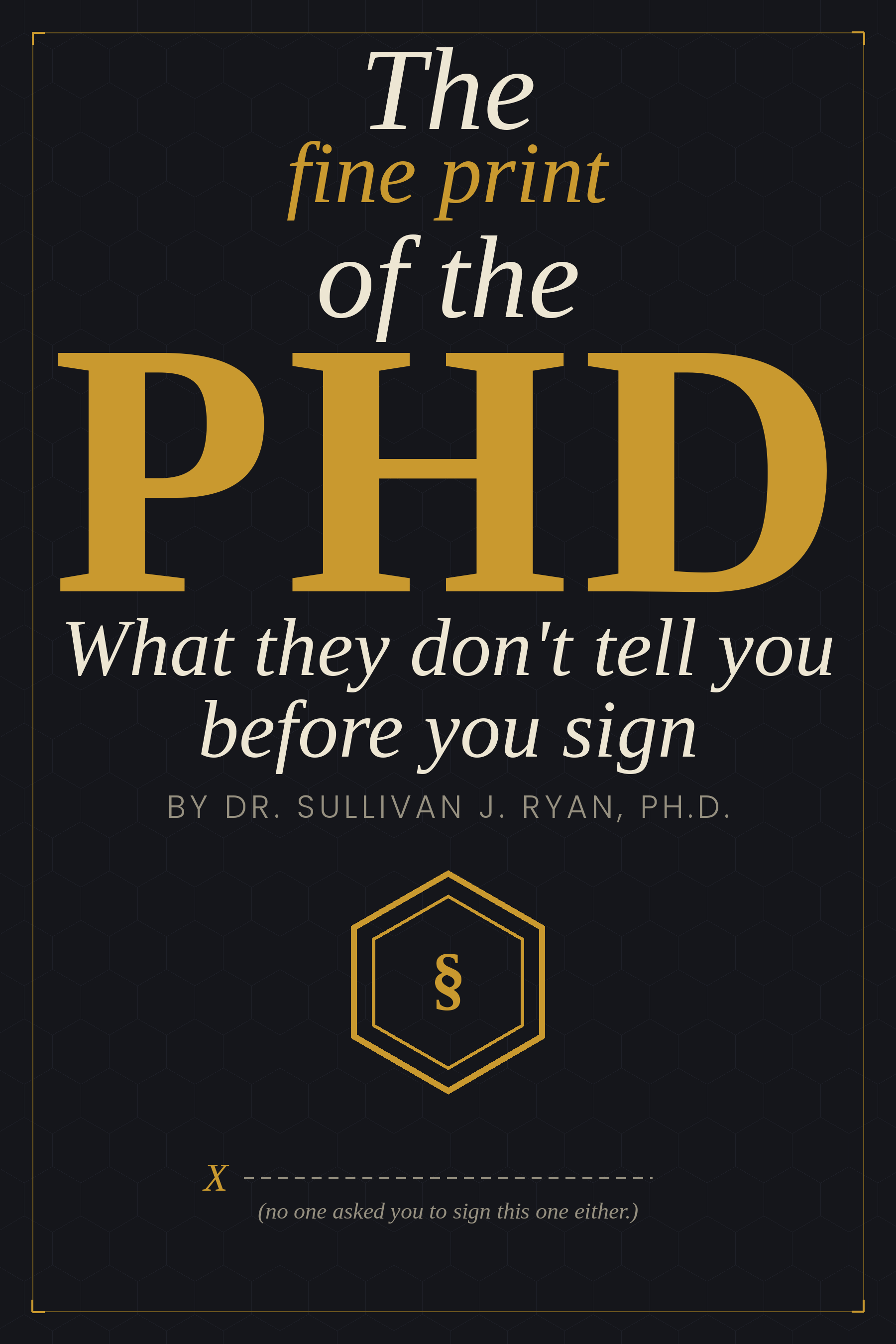
The Fine Print of the PhD walks through the actual terms — grounded in Kahneman, Cialdini, contract law, and a full worked financial comparison — chapter by chapter, clause by clause.
Get the Book on AmazonWhat "worth it" actually depends on
Three things determine the real answer for you specifically, and none of them are what the campus visit talks about:
1. Opportunity cost
What would the same years, spent differently, actually be worth? Not in a fantasy of overnight success — in the ordinary arithmetic of a comparable salary, comparable raises, and comparable retirement contributions compounding in parallel the entire time. A below-market stipend isn't just a modest paycheck. It's years of missed compounding that don't show up until much later, as a gap.
2. The real odds, not the recruiting pitch
The success stories that get circulated — the rare alumnus profiled in the department newsletter — are, almost by definition, not the typical outcome. This is a well-documented statistical error called survivorship bias: the visible sample is disproportionately the people who made it, because the much larger group who didn't are far less likely to be in the room telling you about it.
3. What the credential actually converts to outside academia
Deep specialization doesn't always translate to what hiring managers outside your niche are screening for. Two years of relevant industry experience often outweighs a PhD in the eyes of employers outside academia, because it answers the question they're actually asking — can this person do the job — more directly than an academic credential does.
Frequently Asked Questions
- Is a PhD worth it?
- It depends heavily on field, funding, and what you want the degree to do for you — but for most people, the expected financial value is thin. Roughly 1 to 7 percent of PhD starters land the tenure-track outcome the pitch implies is standard. The book walks through how to run this calculation for your specific field before you decide.
- How much do PhD students actually get paid?
- Stipends vary by field and institution, but a large share pay below local living wage, often without retirement matching or guaranteed summer funding — a gap that compounds over the life of the program and beyond.
- Should I quit my PhD?
- Separate the decision from sunk cost: years already spent are gone either way and shouldn't be the deciding factor for years not yet spent. Ask what you'd choose today, starting from zero.
- What are the alternatives to a PhD?
- A professional master's, a focused bootcamp or certification, direct industry entry, or self-directed study — each trades some best-case upside for a shorter timeline and better odds.
- Why do people leave academia?
- A thin academic job market, low pay relative to training, unstable short-term contracts, advisor power dynamics, and a culture that often normalizes overwork and burnout.
Read the full breakdown
- Should I Quit My PhD? A Framework, Not a Feeling
- How Much Do PhD Students Actually Get Paid?
- Signs You Should Leave Academia (and Signs You Shouldn't)
- PhD to Industry: What Actually Transfers
- Alternatives to a PhD Worth Actually Comparing
- Academia Burnout and Imposter Syndrome: What's Actually Going On
Every chapter is grounded in named, checkable research — not just one person's opinion.
Get The Fine Print of the PhD